Sensory activities are a fundamental part of dementia care, offering profound ways to enhance mood, reduce agitation, and foster a sense of peace . While many sensory activities focus on touch or smell, visual stimulation is equally powerful. A DIY calming sensory bottle (often called a “calm down jar”) is an excellent, cost-effective therapeutic tool that engages multiple senses and provides ongoing benefits for seniors in memory care or aged care settings.

A FREE downloadable printable PDF guide is included at the bottom of this page.
The slow, rhythmic movement of glitter and objects suspended in liquid can help lower heart rates and regulate breathing during moments of anxiety or sundowning . Better yet, the process of making the bottle is a wonderful fine-motor activity that seniors can participate in alongside caregivers or family members.

The Benefits of Sensory Bottles in Aged Care
Sensory bottles offer a unique combination of visual and proprioceptive stimulation. For individuals living with dementia, these simple tools provide several key benefits:
- Visual Tracking and Focus: Watching the slow-moving contents provides a gentle focal point that can distract from distressing thoughts or environmental overstimulation.
- Anxiety Reduction: The mesmerizing effect of the falling glitter acts as a non-verbal coping strategy, promoting a natural calming response in the nervous system.
- Safe Tactile Engagement: Holding and turning a sturdy bottle provides safe, repetitive physical engagement without the mess or risk of traditional water play.
- Sense of Accomplishment: When seniors assist in choosing colors and adding materials to the bottle, they experience a boost in self-esteem and purpose

Step-by-Step Guide: Making a Calming Sensory Bottle
Creating a sensory bottle is simple and requires only a few inexpensive materials. This activity can easily be done one-on-one or as a small group craft session.
Materials Needed
- A sturdy, clear plastic bottle: Smooth-sided bottles (like VOSS water bottles) work best as they offer an unobstructed view. Avoid glass for safety reasons.
- Warm water: Helps the glue dissolve smoothly.
- Clear liquid glue: Standard clear school glue works perfectly. This thickens the water, slowing down the movement of the glitter.
- Glitter: A mix of fine and chunky glitter provides the best visual depth.
- Superglue or hot glue: Essential for permanently sealing the cap to prevent leaks and spills.
- Optional add-ins: Food coloring (just one drop!), plastic beads, or small lightweight shells.

Instructions:
Step 1. Prepare the Bottle: Ensure the plastic bottle is completely clean and all sticky labels are removed.

Step 2. Add the Glue: Pour clear glue into the bottle until it is about 20% to 30% full. The more glue you use, the slower the glitter will fall.
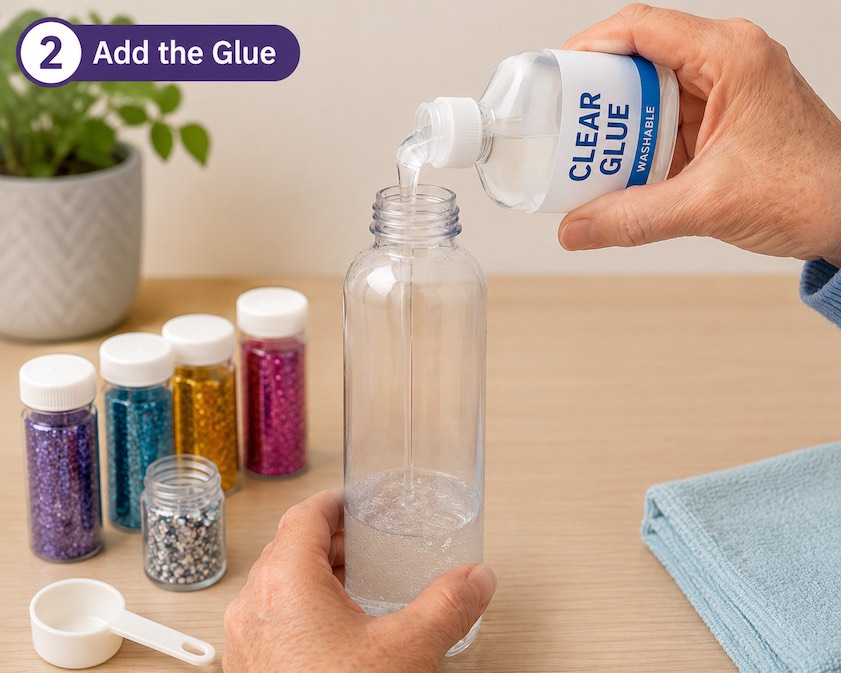
Step 3. Add the Glitter: Let the senior choose their favorite colors. Pour in one to two tablespoons of mixed glitter.

Step 4. Fill with Warm Water: Fill the remainder of the bottle with warm tap water, leaving about an inch of empty space at the top so the contents have room to move when shaken.

Step 5. Test the Flow: Put the cap on tightly (do not glue it yet) and give the bottle a good shake. If the glitter falls too quickly, pour out a little water and add more glue. If it moves too slowly, add more warm water.

Step 6. Seal Permanently: Once you are happy with the flow, dry the inside of the cap and the rim of the bottle. Apply a generous ring of superglue or hot glue to the threads and screw the cap on tightly. Allow it to dry completely before use.

How to Use the Sensory Bottle Therapeutically
Once the bottle is sealed and ready, it can be kept in a resident’s room or in a communal sensory space. When a senior appears restless or anxious, gently hand them the bottle. Encourage them to turn it upside down or give it a shake, then sit together and watch the glitter slowly settle to the bottom.
This simple, shared activity requires no verbal communication, making it an ideal intervention for late-stage dementia, providing comfort, connection, and a beautiful moment of calm.
Safety Notes
- Use plastic bottles only, not glass.
- Always supervise the activity, especially when using glue, hot glue, beads, or small shells.
- Seal the cap securely before giving the bottle to a resident or loved one.
- Choose larger beads or avoid small add-ins where swallowing risk is a concern.
Download your printable PDF copy of How to Make a Calming Sensory Bottle for Seniors